The topic OLED banding is worse than burn-in, and most TV shoppers have no idea it exists is currently the subject of lively discussion — readers and analysts are keeping a close eye on developments.
This is taking place in a dynamic environment: companies’ decisions and competitors’ reactions can quickly change the picture.
I worry way too much about display defects on modern TVs. Up until recently, I was terrified of OLED burn-in until I found these 3 settings. Y’know what has troubled me even more since I picked up my first “Organic Light Emitting Diode” screen back in 2015? OLED banding.
Unless you’re a massive AV-obsessed nerd like myself, you may not know what banding actually is. In short, it typically manifests as a series of thin vertical lines across a screen (though they can also appear horizontally). It’s a subtle issue that, once you notice it, though, can prove incredibly tough to unsee.
Let me explain exactly what display banding is, and provide tips on how to alleviate this issue.
OLED banding is a type of display defect that is caused during the manufacturing process. Because not all TVs are created equal on the production line, no two screens will ever be identical, even if they’re the same model.
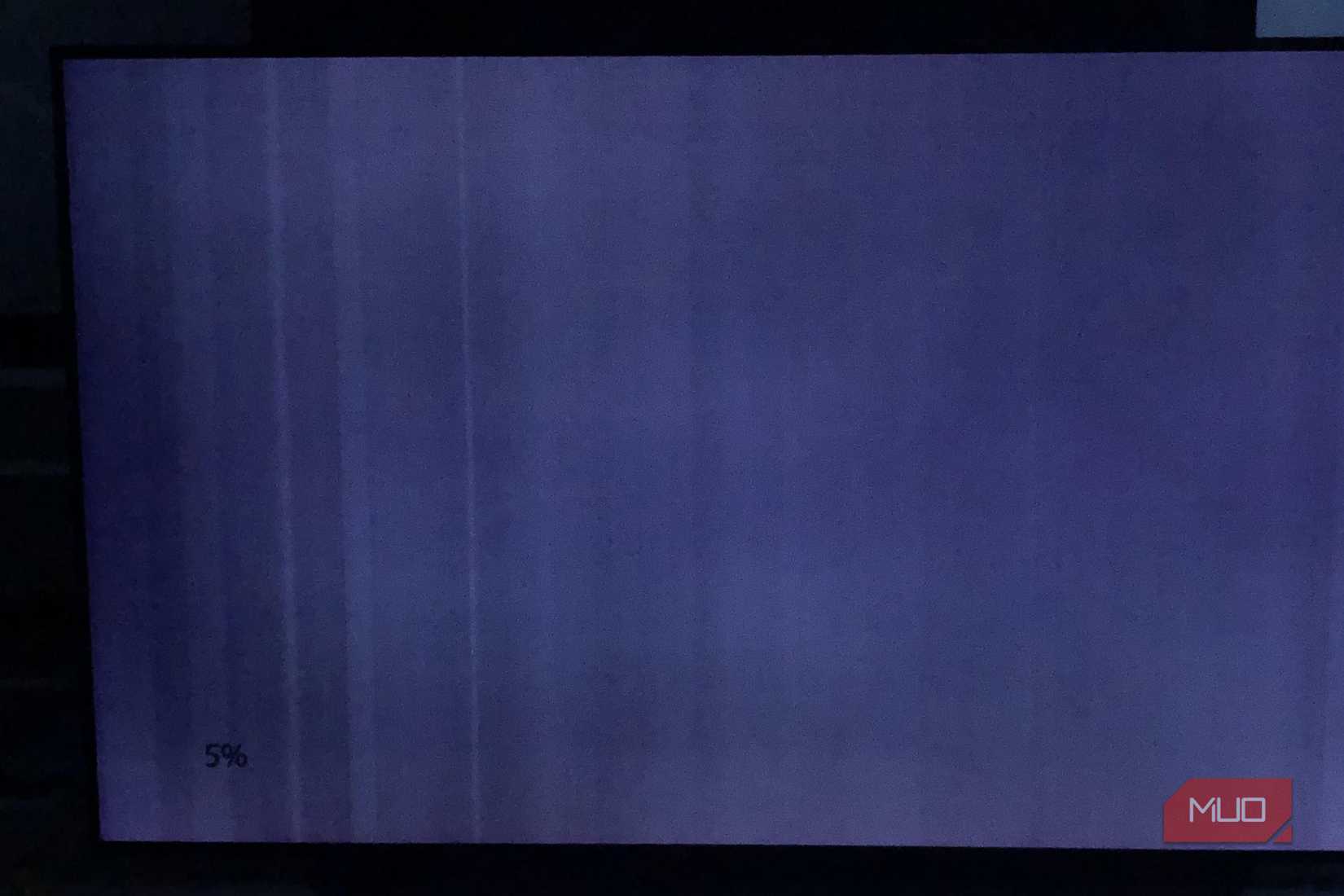
OLED screens are self-emissive, which means different pixels on a panel can be brighter or dimmer than others; this is the primary cause of banding. This defect isn’t limited to a single TV manufacturer — I’ve returned LG, Phillips, Samsung, and Sony OLED displays due to banding.
Vertical banding is most common on OLED TVs and manifests in a way that isn’t entirely different from the “Dirty Screen Effect” (DSE) on LCD panels. Whereas DSE produces noticeable blotches on LED displays due to some panel areas being brighter than others, banding appears as thin vertical lines. These are easier to spot in dark scenes, where screen brightness is generally 5-10% above black.
Smooth gradients/uniform backgrounds can also make vertical banding clearly visible, particularly during camera pans. What content will coax out banding issues the most? In my experience, that would have to be certain live-action sports (especially ice hockey), and playing video games where you’re constantly panning the camera across blue skies (as is common in many open-world titles, like Shadow of the Colossus or Red Dead Redemption 2).
Rockstar’s outlaw epic is perhaps the one game I can think of more than any other that makes vertical banding particularly easy to spot on an OLED TV. Arthur Morgan’s Old West world constantly encourages you to slowly shift the camera to admire the blisteringly blue skies above its rolling prairies. On panels with poor screen uniformity, where particular sections are brighter than others, vertical bands can prove oh-so distracting if you have a keen eye.
When obsessive TV dweebs like me talk about “the panel lottery” on forums, they’re referring to the fact that some OLED screens can be blighted with worse banding than others.
I’ve sent back an embarrassing number of OLED TVs over the years, swapping them during the return period until I found a panel with a level of banding I could live with. You’ve got a lot to answer for, Arthur. Thankfully, this awesome accessory made my OLED TV so much better, even when I was suffering from the banding blues.
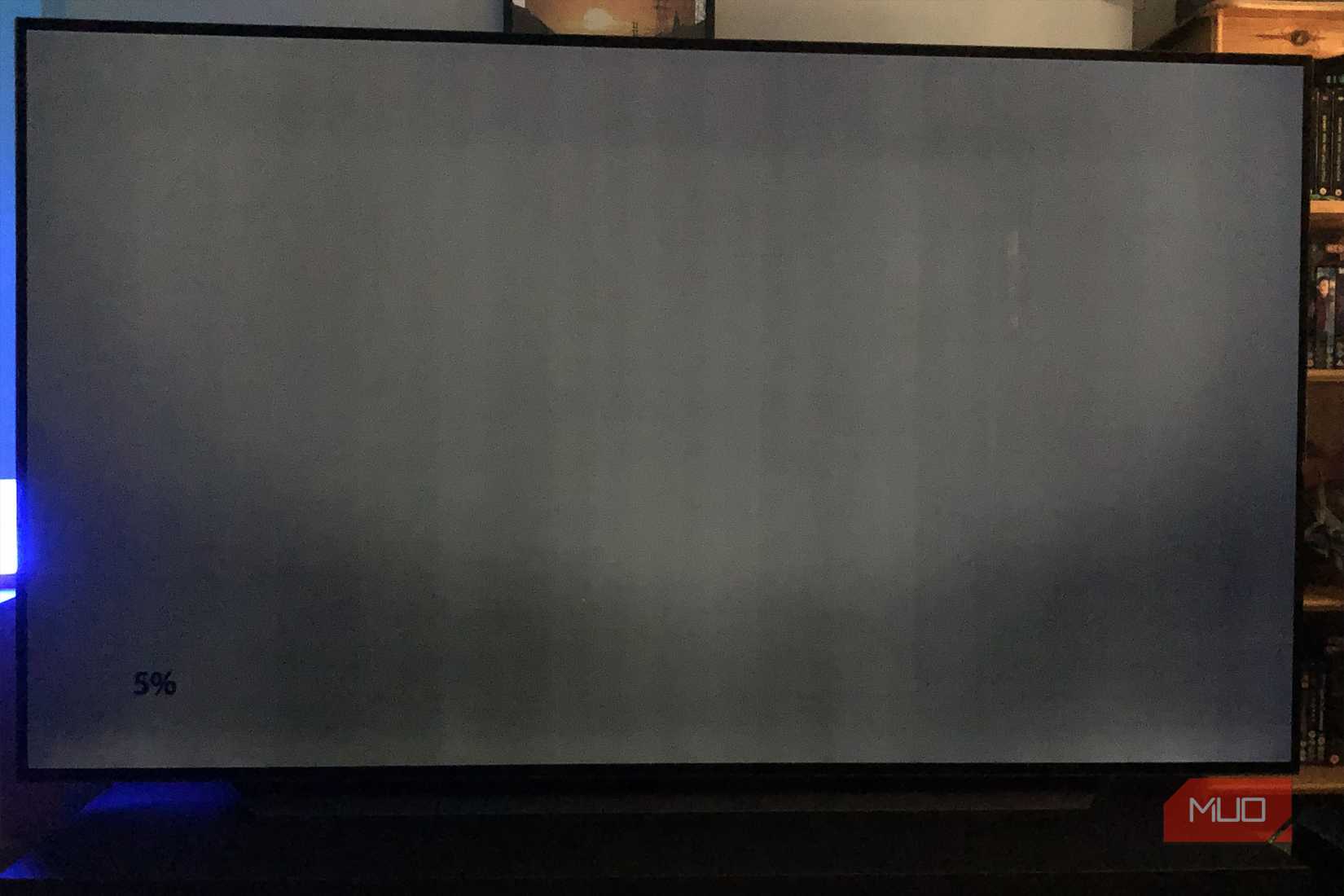
In short? Sometimes. While no large OLED TV is going to have a perfectly uniform panel, based on my past unhinged experiences of returning OLEDs at an alarming rate, it’s best not to judge a screen straight out of its box. Generally speaking, OLED TVs take a little while to settle in. If you spot particularly bad banding shortly after unboxing your display while viewing YouTube test patterns that check screen uniformity via grey-scale tests, try not to immediately freak out.
Instead, it’s best to give your new TV time to settle. After around 100 hours of normal screen usage, your panel should hopefully look more uniform, with clear gradients and dark areas appearing as opposed to when you first unboxed it.
You can further help reduce banding in your OLED by using panel/pixel refresh cycles. Said cycles are one of the ways modern OLEDs prevent burn-in, but they can also help reduce banding if you run them daily over a number of weeks.
With some manufacturers, pixel-cleaning features must occasionally be manually enabled. With LG OLEDs, though, a panel refresh will kick in after four hours of continuous use (provided it’s in standby mode). In modern OLEDs, this process typically takes only around 10 minutes and can really help reduce banding over time.
I’ve yet to encounter an OLED TV that didn’t have at least a little vertical banding. Thankfully, pixel cleaning cycles are more effective than they used to be, and in general, I’ve found that as OLED technologies has improved, banding issues have lessened.
for example, my current LG G3 OLED from 2023 has much less banding than the LG C1 OLED I bought in 2021. Banding doesn’t blight OLED panels quite as often as it used to, but it’s still a screen issue my eyes are constantly on the lookout for.
The LG evo AI C5 OLED TV is a solid buy for those looking for a relatively affordable but powerful and gorgeous looking OLED TV. With lots of built-in technologies to combat burn-in, it’s not as big a problem as it was in the past.